

A Profit & Loss (P&L) Statement, also known as an income statement, is a financial report that summarizes a company’s revenues, expenses, and profits (or losses) over a specific period. It’s a critical tool for understanding a business’s financial performance and making informed decisions. Whether you’re a business owner, investor, or financial enthusiast, here are the key points you need to know about P&L statements. What is a P&L Statement? The P&L statement provides a snapshot of a company’s financial health by detailing:
- Revenues: Money earned from sales or services.
- Expenses: Costs incurred to generate revenue.
- Net Income: The profit (or loss) after subtracting expenses from revenues.
It’s typically prepared monthly, quarterly, or annually and is used by stakeholders to assess profitability, operational efficiency, and trends over time.
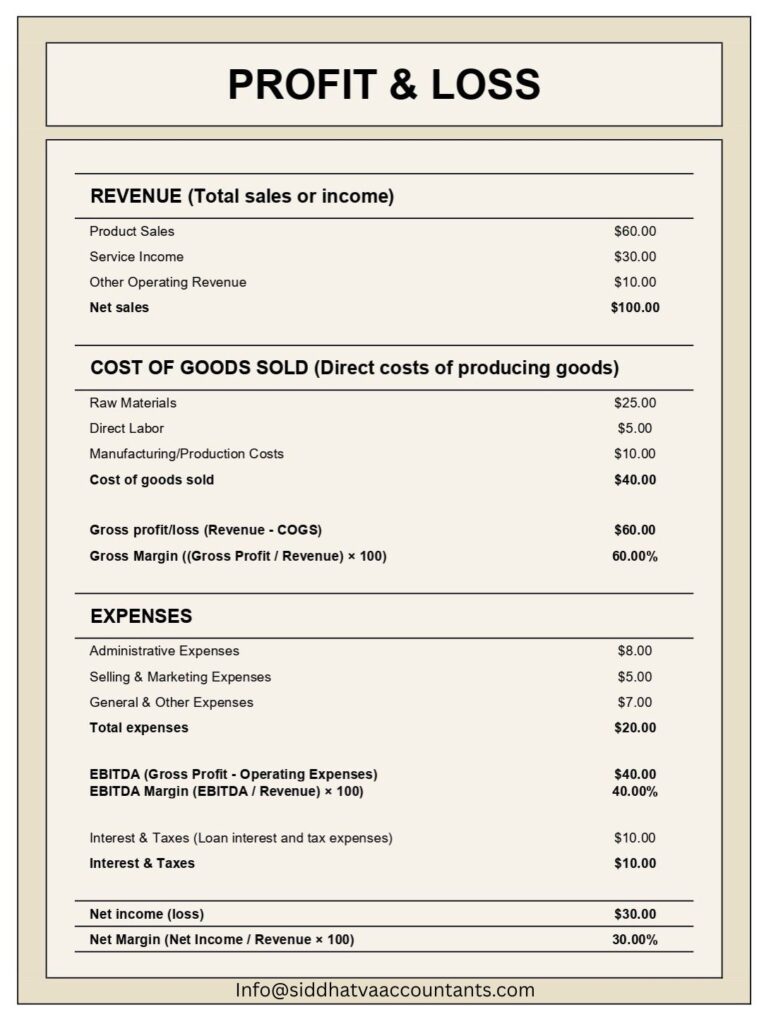
Key Components of a P&L Statement
Revenue
- Represents the total income from goods sold or services provided.
- May include categories like product sales, service income, or other operating revenue.
- Example: A retail store’s revenue includes sales from clothing and accessories.
Cost of Goods Sold (COGS)
- Direct costs associated with producing goods or services sold.
- Includes raw materials, labor, and manufacturing costs.
- Example: For a bakery, COGS includes flour, sugar, and wages for bakers.
Gross Profit
- Calculated as: Revenue – COGS.
- Indicates how efficiently a business produces goods or services.
- A higher gross profit margin suggests better cost management.
Operating Expenses
- Costs not directly tied to production, such as rent, utilities, marketing, and salaries for administrative staff.
- Often categorized as selling, general, and administrative expenses (SG&A).
- Example: Office rent and advertising costs.
Operating Income
- Calculated as: Gross Profit – Operating Expenses.
- Shows profitability from core business operations before interest and taxes.
Other Income and Expenses
- Includes non-operating items like interest income, interest expense, or gains/losses from asset sales.
- Example: Interest paid on a business loan or income from investments.
Net Income
- The final profit or loss after all expenses, taxes, and other income are accounted for.
- Calculated as: Operating Income + Other Income – Other Expenses – Taxes.
- A positive net income indicates profitability, while a negative value indicates a loss.
Why is the P&L Statement Important?
- Performance Evaluation: Helps assess whether a business is profitable and how effectively it manages costs.
- Decision-Making: Guides pricing strategies, cost-cutting measures, and investment decisions.
- Investor and Lender Insights: Investors and banks use P&L statements to evaluate financial health and creditworthiness.
- Trend Analysis: Comparing P&L statements over time reveals growth patterns or areas needing improvement.
How to Read a P&L Statement
- Start with Revenue: Look at the top line to understand the business’s income-generating ability.
- Check Gross Profit Margin: Divide gross profit by revenue to assess production efficiency.
- Analyze Operating Expenses: High expenses relative to revenue may indicate inefficiencies.
- Evaluate Net Income: A consistent positive net income signals a healthy business.
- Compare Over Time: Look at multiple periods to identify trends or seasonal patterns.
Common Metrics Derived from P&L Statements
- Gross Margin: (Gross Profit / Revenue) × 100
- Measures profitability after accounting for production costs.
- Operating Margin: (Operating Income / Revenue) × 100
- Shows efficiency of core operations.
- Net Profit Margin: (Net Income / Revenue) × 100
- Indicates overall profitability after all expenses.
Tips for Using a P&L Statement Effectively
- Regular Updates: Review P&L statements monthly or quarterly to stay on top of financial performance.
- Benchmarking: Compare your P&L metrics to industry standards to gauge competitiveness.
- Break Down Expenses: Identify areas to cut costs without compromising quality.
- Use Accounting Software: Tools like QuickBooks or Xero can automate P&L creation and analysis.
Conclusion
The P&L statement is a vital tool for understanding a business’s financial performance. By breaking down revenues, expenses, and profits, it provides actionable insights for stakeholders. Regularly analyzing your P&L statement can help you make informed decisions, optimize operations, and drive long-term success. Want to dive deeper into financial statements or need help analyzing your P&L? Let us know in the comments or explore our other financial guides!
Balance Sheet Statement
What is a Balance Sheet? A Balance Sheet, also known as a statement of financial position, is a financialreport that…
Profit & Loss (P&L) Statement
A Profit & Loss (P&L) Statement, also known as an income statement, is a financial report that summarizes a company’s revenues,…

Accounting Conventions and Concepts
Introduction A) Accounting Concepts 1. Entity Concept 2. Money Measurement Concept 3. Periodicity Concept 4. Accrual Concept 5. Matching Concept…
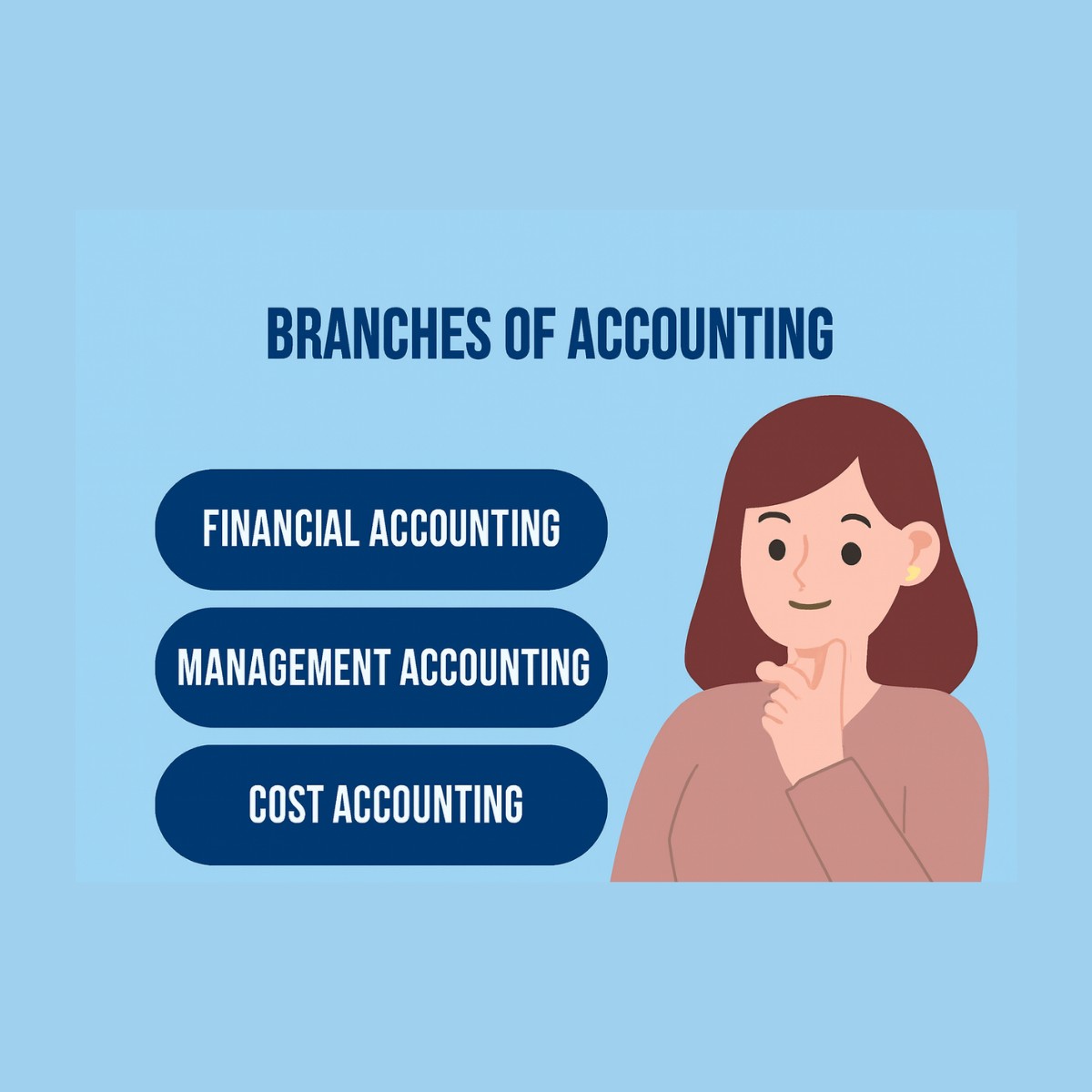
Branches of Accounting
Branches of Accounting Introduction Meaning of Accounting Branch Different Branches of Accounting » Financial Accounting » Managerial (Management) Accounting »…

Accrual vs. Cash Basis Accounting
Why Your Business Growth Depends on the Right Choice When it comes to managing business finances, one of the earliest…
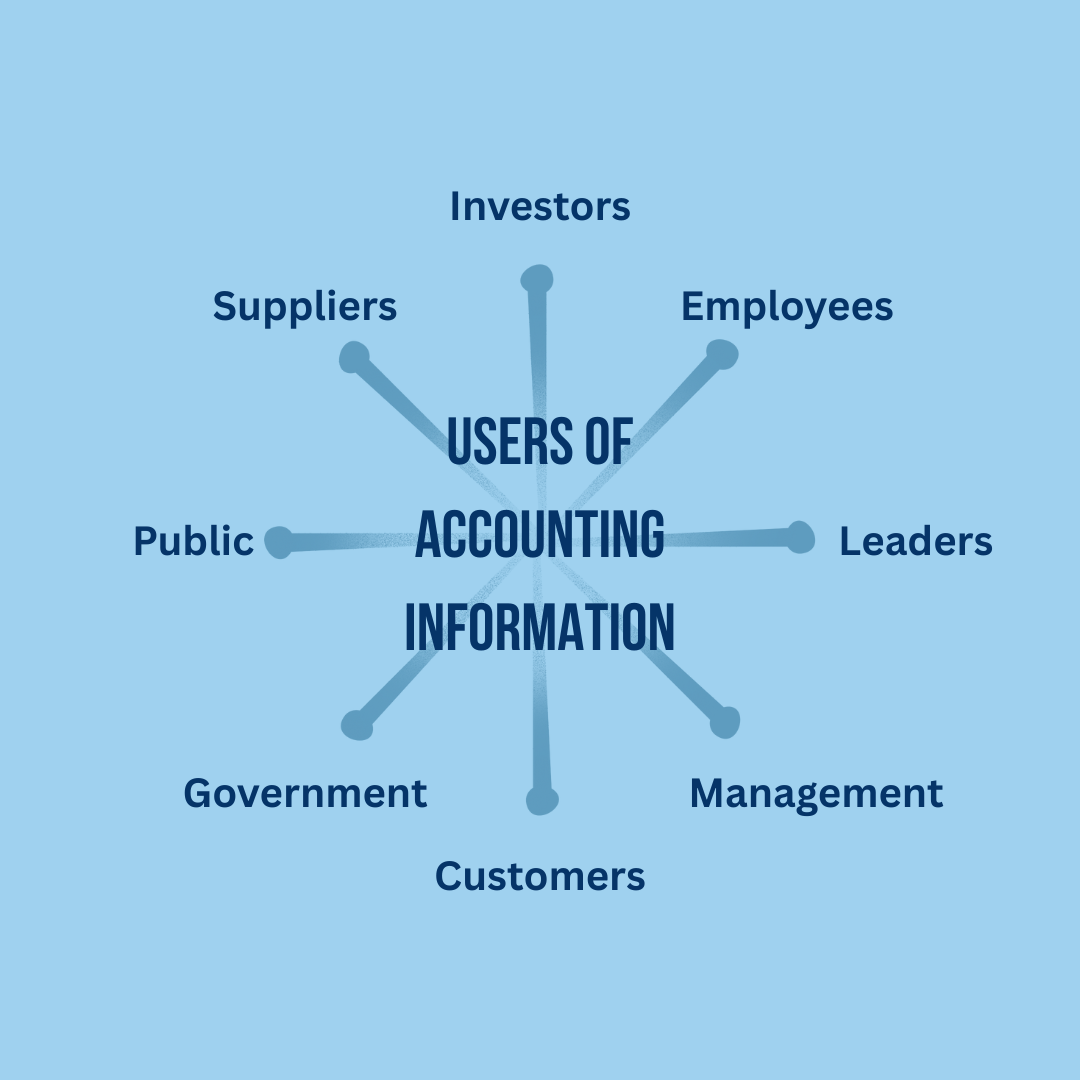
Users of Accounting Information
Accounting information is the backbone of every business decision. It provides valuable insights into a company’s financial performance, helping various stakeholders…
Difference between Bookkeeping and Accounting
In the world of finance and business, the terms bookkeeping and accounting are often mentioned together, but they are not the same. Both play…

Types of Accounts and Golden Rules of Accounting
Accounting is often referred to as the language of business, as it systematically records and communicates financial information. At the heart…
Why SMEs Are Turning to Outsourced CFO Services
In today’s fast-paced and unpredictable business environment, small and medium-sized enterprises (SMEs) are under increasing pressure to manage growth, cash…
Why Budgeting Is Essential?
In business, what gets measured gets managed, and budgeting is one of the most powerful tools you have to measure and…
We already have an accountant… why would we outsource?
I hear this from almost every founder we speak with.And it’s a completely valid question. An internal accountant is crucial…
Top 10 Key Advantages of Doing Daily Bookkeeping
In today’s fast-paced business world, financial clarity isn’t optional; it’s essential. Yet, many businesses underestimate the long-term impact of maintaining their books…
Why Outsource Your Accounting & Financial Services?
In today’s fast-paced business environment, companies are constantly seeking ways to increase efficiency, reduce costs, and focus on their core…

The 5 Most Common Financial Mistakes SME Owners Make and How to Avoid Them
Running a small or medium-sized business is no easy task. Between managing operations, serving clients, and leading teams, financial oversight…
How to Manage Accounts Payable Effectively
Accounts Payable (AP) might not grab headlines, but how you manage it can make or break your business cash flow.Poor…
Work Hard? Nah. Work Smart with QuickBooks Online.
Running a small business is no small task. Between managing operations, serving customers, and planning for growth, accounting often gets pushed…
Outsource Your Receivables
Ensure Smooth Payments, Reduce Defaults. Cash flow is the lifeblood of any business, and your receivables process is its heartbeat.…
Master Your Money: Proven Strategies to Control and Manage Business Expenses
Your business isn’t defined by what you earn, but by what you keep.And if you want lasting profitability, there’s one…
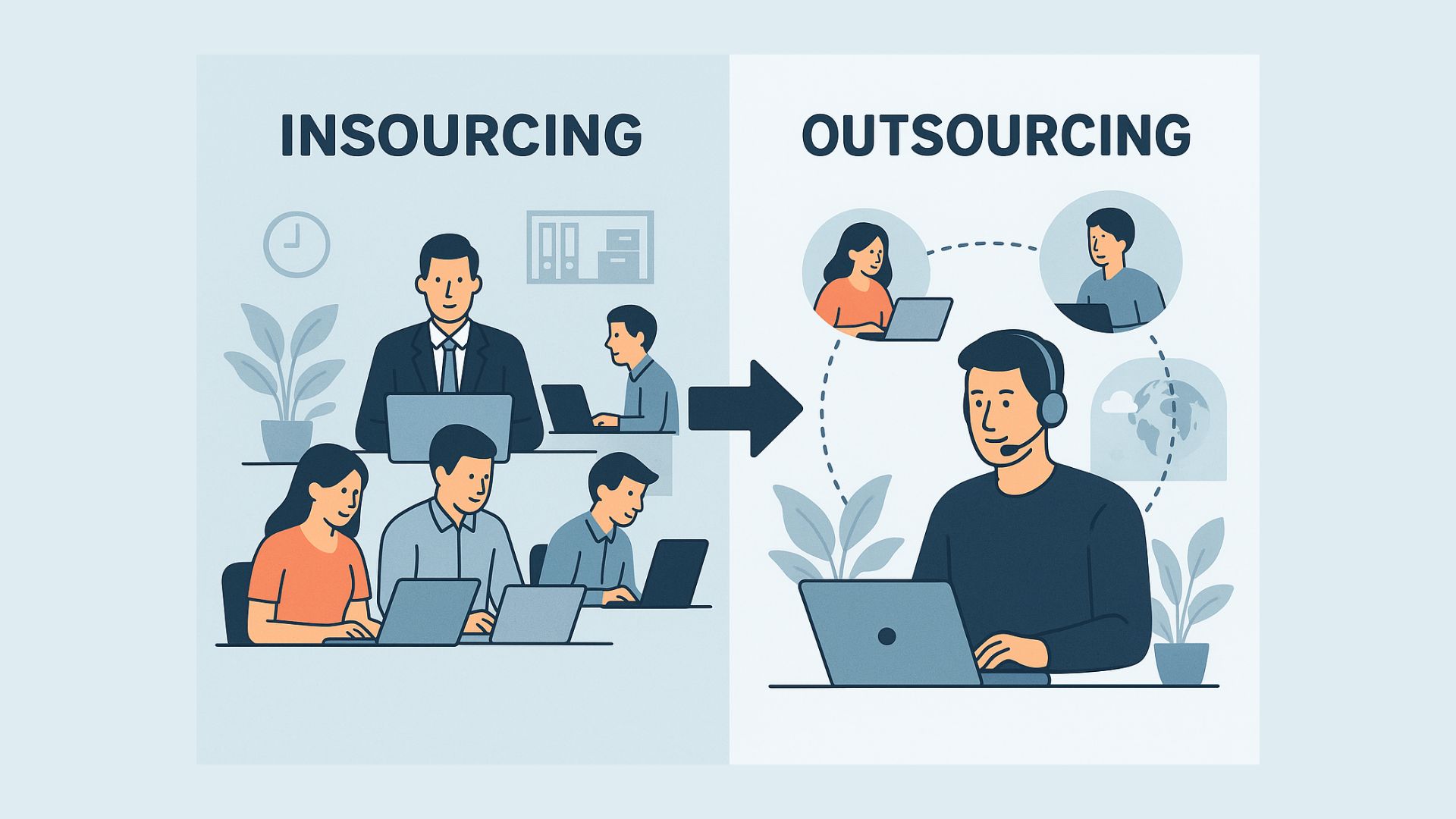
What Really Changes When You Outsource Your Accounting
Every business reaches a point where internal accounting processes slow down decision-making, drain valuable resources, and limit strategic focus.And then,…

Why Smart Businesses Outsource Bookkeeping to India?
Breaking Borders, Building Efficiency: Why Smart Businesses Outsource Bookkeeping to India In today’s global economy, success belongs to those who think…
Why Your Business Needs CFO Services Today
In the dynamic world of business, financial expertise can be the difference between success and stagnation. CFO services offer a…
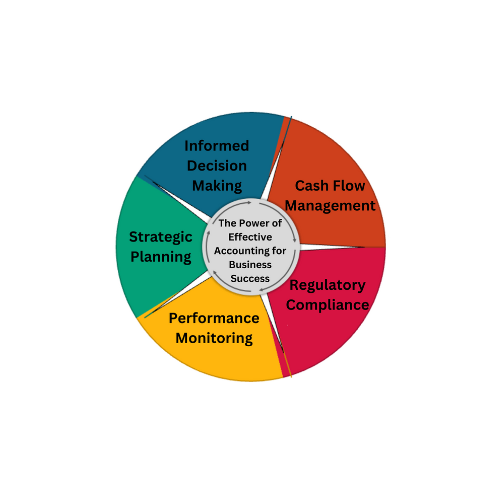
The Power of Effective Accounting for Business Success
In the fast-paced world of business, effective accounting is not just a necessity; it’s a game-changer. Accurate and strategic accounting…

How to Export Lists From QuickBooks Online
In this tutorial, you’ll learn how to export lists from QuickBooks Online. Quick Instructions: Export Customer, Employee & Vendor lists:…

3 Strategies to Boost EBITDA and Drive Value Creation
Private equity (PE) fund sponsors often expect CFOs to play a pivotal role in enhancing EBITDA (earnings before interest, taxes,…

Title: Navigating 2024: A CFO Action Plan for Success
As we step into 2024, CFOs find themselves at the forefront of steering their companies through a landscape marked by…